All Kind of Bridges (Great and Small)

Image

We are now in North Carolina and will stop at Coinjock for the night (shower! Restaurant!). Virginia was a challenge with its narrow canals, or channels in the middle of what appeared like lakes but were mostly shallow. Dickie did not get us stuck in a shoal–that is YET, because mud gets moved around in the waterway and charts can’t always keep up. Our guide says everybody gets stuck, and those who have not yet will soon, or are just liars.

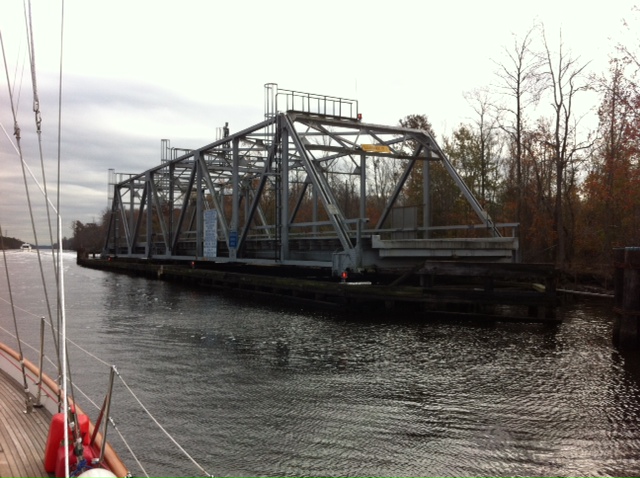
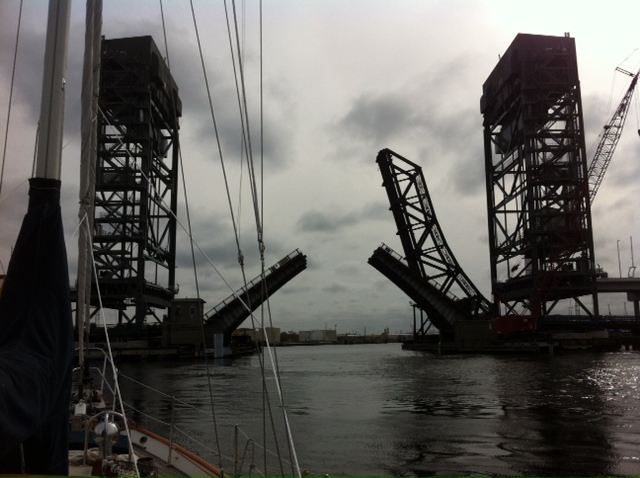
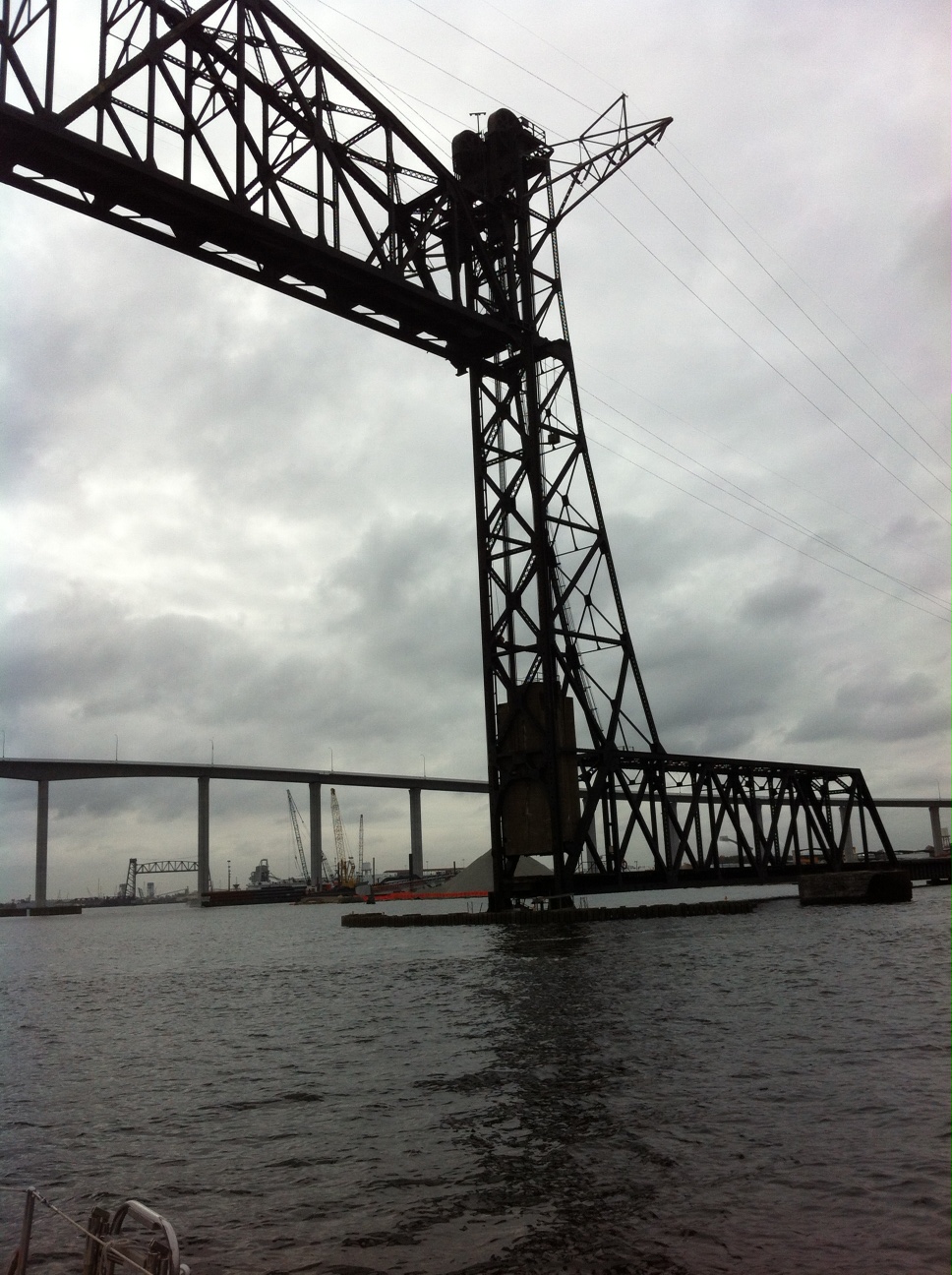
So, bridges in Virginia of all kinds. I may not have them in perfect order, but here are a few of them, mostly those we got stuck at from 10-59 minutes waiting for them to open. Yes, the 59 minutes closed on us just as we approached it. They follow different rules (closed during traffic hours, for trains, at specific times), and are of different types: fixed, lift, bascule, pivot swing. A practical lesson in 19th century engineering. I say 19th century because my reference is the 1889 Eiffel tower, the ultimate (vertical) bridge. I realize the bridges were built in the last century. Above, the Gilmerton bridge, quite impressive with its double bascule, and then behind another bridge for the railroad. We were still in an industrial part of the Waterway. There were piles of junk metal, which Dickie guessed were going to China. And then, I suppose back here in the US transformed into Apple computers.
Image

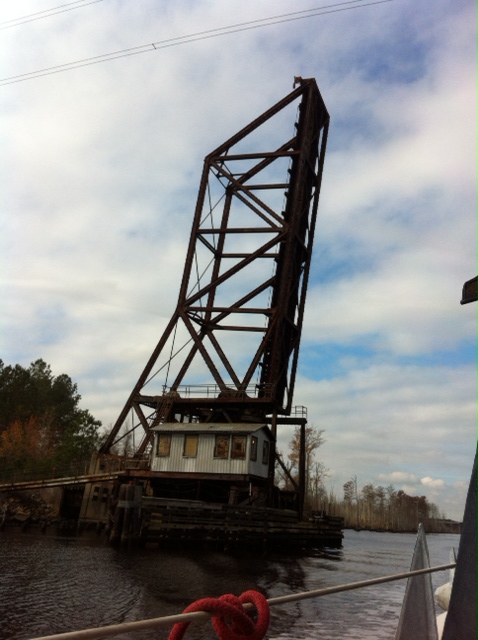
The Norfolk Southern bascule bridge, which is manned–see the little house? You are supposed to thank the bridge operator (through the radio) when they open it for you. I’m sorry if it gets boring to look at, but the blog is such a wonderful way for Dickie and I to remember them.
Image

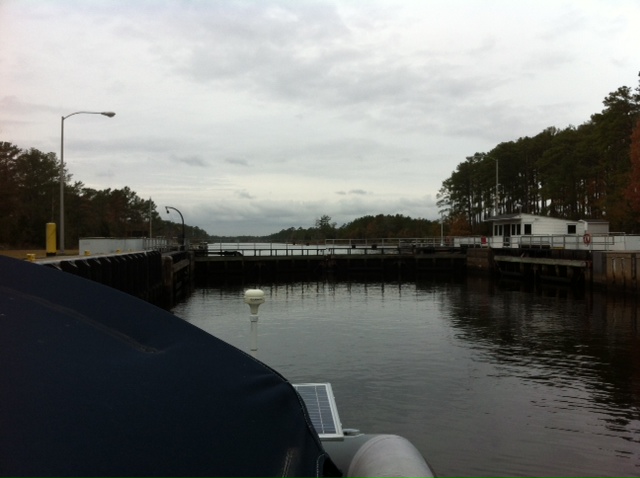
We had read about the Great Bridge lock, and were anxious about going through it even though it has only a 1 to 4 feet of rise. The lady at the lock helped us with the cleats and called the dock a little further to ensure they had room for us. So grateful. By then, we were loaded and worn out with new experiences. We docked for the night in what seemed an abandoned dock with an empty parking lot near by. Alas, Dickie’s computer was out of power, and we did not get to watch “All Creatures Great and Small.” We finally figured out how to download movies or TV series. Stuart was our pro with that type of technology, besides we normally only watch the tennis channel or the news (or football when Dickie has a match he really cares about).
Image

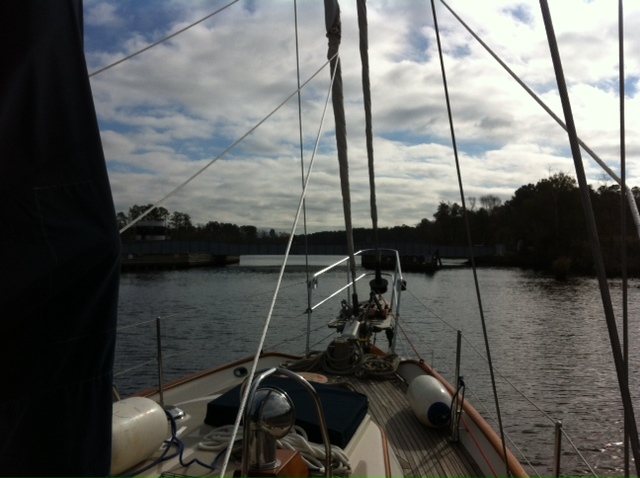
North Landing bridge, closed, darn. This is how it felt all day long. Closed. Again. Darn. Oh well. It’s a double pivot swing, and the one below gives an idea of how it works.
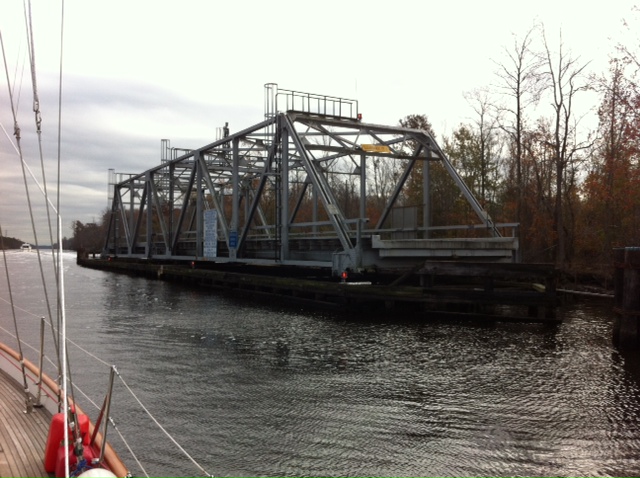
ImageCenterville Turnpike bridge. See how it swings on its pivot? Swamps and forests surround us, a drastic change from industrial Norfolk.
Killer Insects

Image

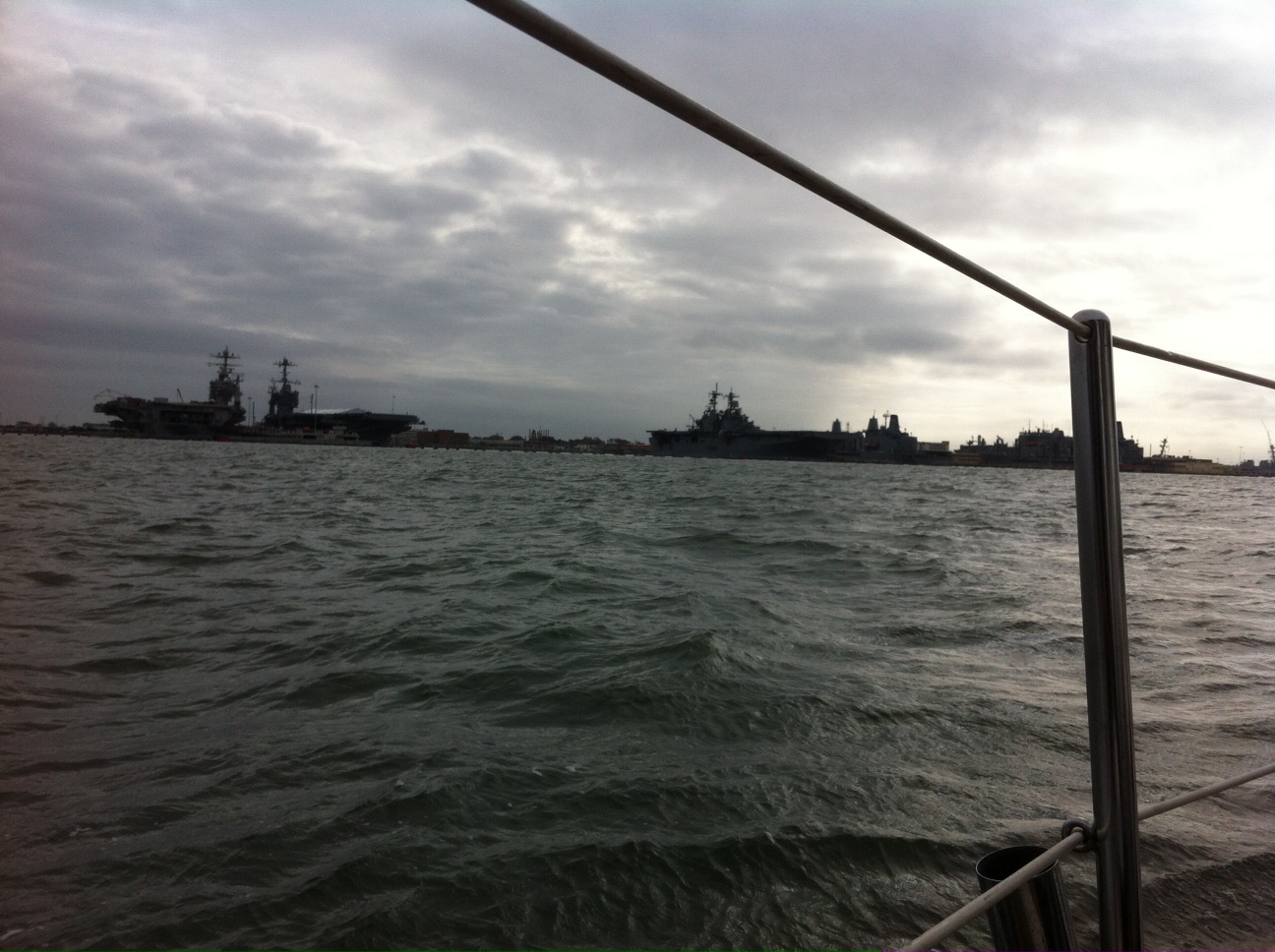
We crossed Hampton roads this morning, open to the ocean and turbulent. We swung by Norfolk and its naval docks. War ships hang in there, in a zone surrounded by markers and reinforced by helicopters and boats with flashing lights. We are keeping snug to the red rigth markers at the side of the deep channel, as opposite them as we can. Flashing lights on cars are no good, and we guess the same rule applies to boats. I wonder, “How deep is the channel?” Dickie looks at his depth meter that prefers the “off” position to the “on” and we still can’t figure out why, “60 feet.” He muses, “A bit much for even such big ships. Hmm… might be for submarines…” Sparkle in his eyes, “Hey, there might be a submarine below us right now!” Of course, we milk the subject a while—what if we got a message on the radio as we did from a tug boat 2 days ago, “sailboat Peregrine, you are 20 feet from us, and need to move to starboard,” and we’d look around seeing nothing until a huge dark form would emerge from the depth bla bla bla.

The black, hard-shelled war ships with their antennas look much like insects, and when you think about it, insects from all the animal kingdom are the most threatening to us city folks. In Atlanta—for example—our tigers and lions are safely put away in cages (and we might well manicure their claws into useless weapons), while mosquitoes approach us at their will. And although we are on constant guard, many of them manage to draw our blood and leave us with a killer virus.  This is an exciting trip. 

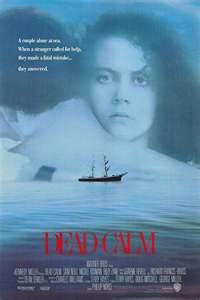
“Dead Calm” (dedicated to Robin, Kami, Stacee, Michelle and Rachel)

Image

In the 1989 film, “Dead Calm” by Phillip Noyce with Nicole Kidman, Sam Neill and Billy Zane, a lone couple on a boat offers hospitality to a shipwreck victim, Hughie, who soon turns out to be a manic murderer. Here is a film review: “The main flaw in this otherwise excellent thriller movie is the first 15 minutes or so. The horrific traffic accident in which the sailing couple lose their only child adds nothing to the main line of the movie’s tale.” I agree about the excellence of the thriller, which is by the way Nicole Kidman’s first performance. I don’t agree with the death of their son having nothing to do with the story. Dick and I lost our Stuart over a year ago, and our similar storyline of a lone couple who has lost a son and goes on a boat trip, leads me to believe the film is all about the couple’s loss and how they deal with it. In this perspective, Hughie is an allegory of grief (“Grief”), and if you want to get an idea about how going through grief feels (and would like to see Kidman as a young actress), watch the movie.

Going through grief is just as violent as what the couple goes through. It takes your mind over but your body too, all the time, with no chance for escape. In the movie, John and Rae are quickly separated. No matter how close the couple, grief is an experience you live through on your own. John goes on the wrecked ship, where he encounters death face on. When losing a child, you worry about what happened to him, and you can’t put aside dealing with death as you might have done before. John almost dies suffocated, yet keeps on fighting through it. Living with grief requires that type of endurance. If you choose to live, you must walk through the fire day after day before you can make it to the other side.

Meanwhile, Rae is physically violated by Grief (Hughie rapes her). When you carried a baby for nine months, nursed him, felt his warm body as part of you (true for dads too), it is a violation in the most intimate part of your body when that child dies. Rae reacts little as she gets raped: the true violation came before, when her son died. She “just” relives the trauma.

John and Rae reach out for each other’s hand and are reunited. He washes her hair with a love of a new, deeper kind. Love that survives Grief is enlarged in the process–love for the child you lost that had to be transformed to reach him on the other side, but also love for your spouse, love for your other children (and their wives…), and yes, love for the world at large. And as we think John and Rae have won the battle, Grief comes back in another assault. You never get over Grief, but with time and like this couple, you get better at dealing with it.

Self-sufficient Peregrine

Image

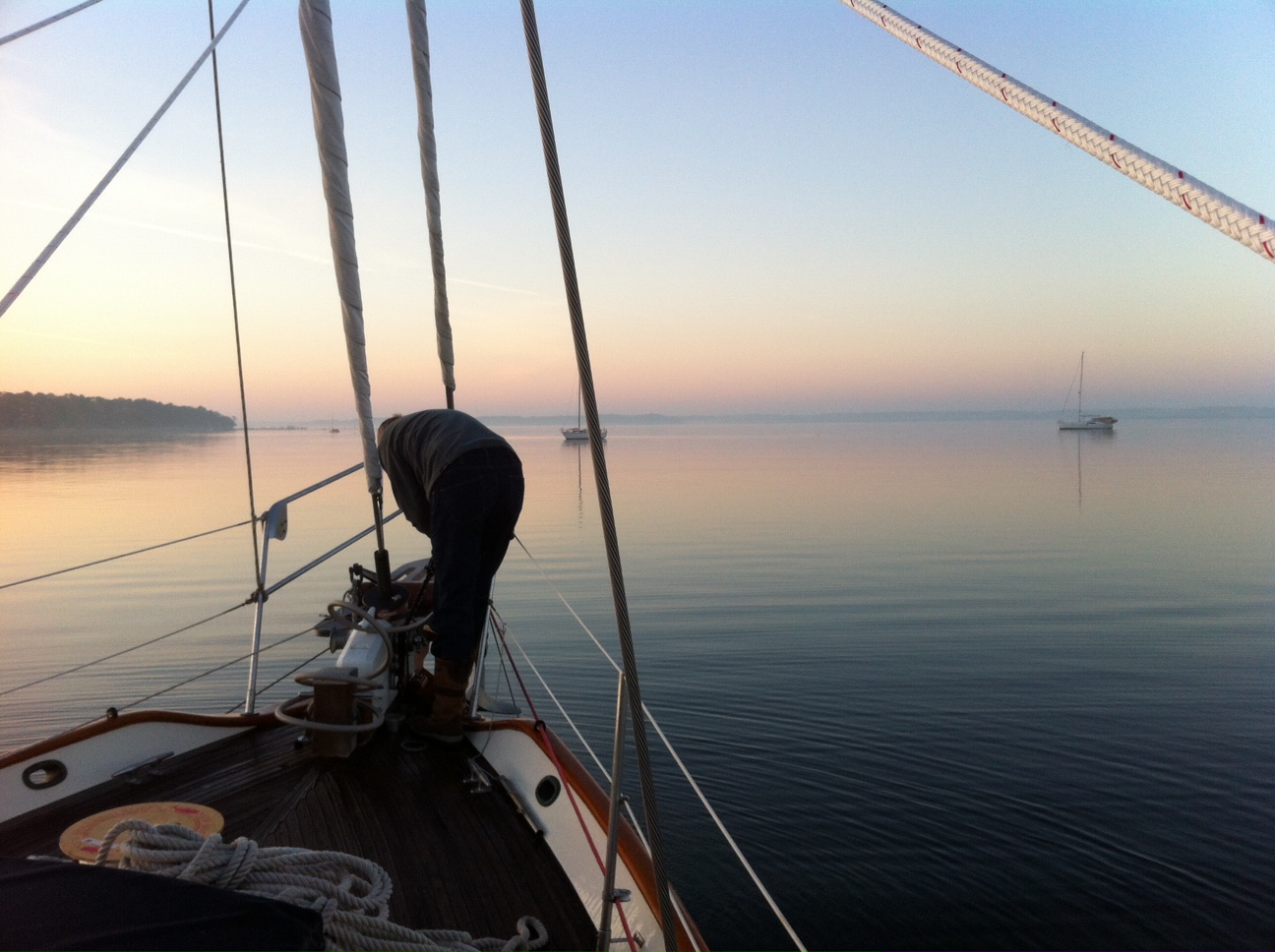
Weighing the anchor at first light this morning.  Just a few ripples in Fishing Bay, yet wind and waves will start building up this afternoon and we are eager to get to Hampton. Depending on the severity of the storm, we might stay put for a couple of days. I have not been sick so far (thanks Peregrine!), and we’d rather avoid waves over 4 feet. It would be fine in the ocean, but in the Chesapeake they are choppy and uncomfortable. We are going to dock at a marina, which means access to showers, heat (we have not used the cute but temperamental stove since Annapolis), plenty light, and TV. Our 3 channels have bad connections, but Doc Martin is worth the image flickering.

We have been on Peregrine non-stop since Friday morning, but to get fuel (diesel) and empty the holding tank (which holds, hmm, another kind of fuel if you see what I mean). We are so used to the movement on Pere, that it felt confusing to be on the stable dock. The tide is only one foot in the Chesapeake, and the docks are not floating like they do in Georgia. We were discussing the self-sufficiency of a boat last night, revisiting the story of Noah and his microcosm of the world holding into one single boat. Dickie would like to install a generator working on diesel.

Anchoring at Solomons Island

Image

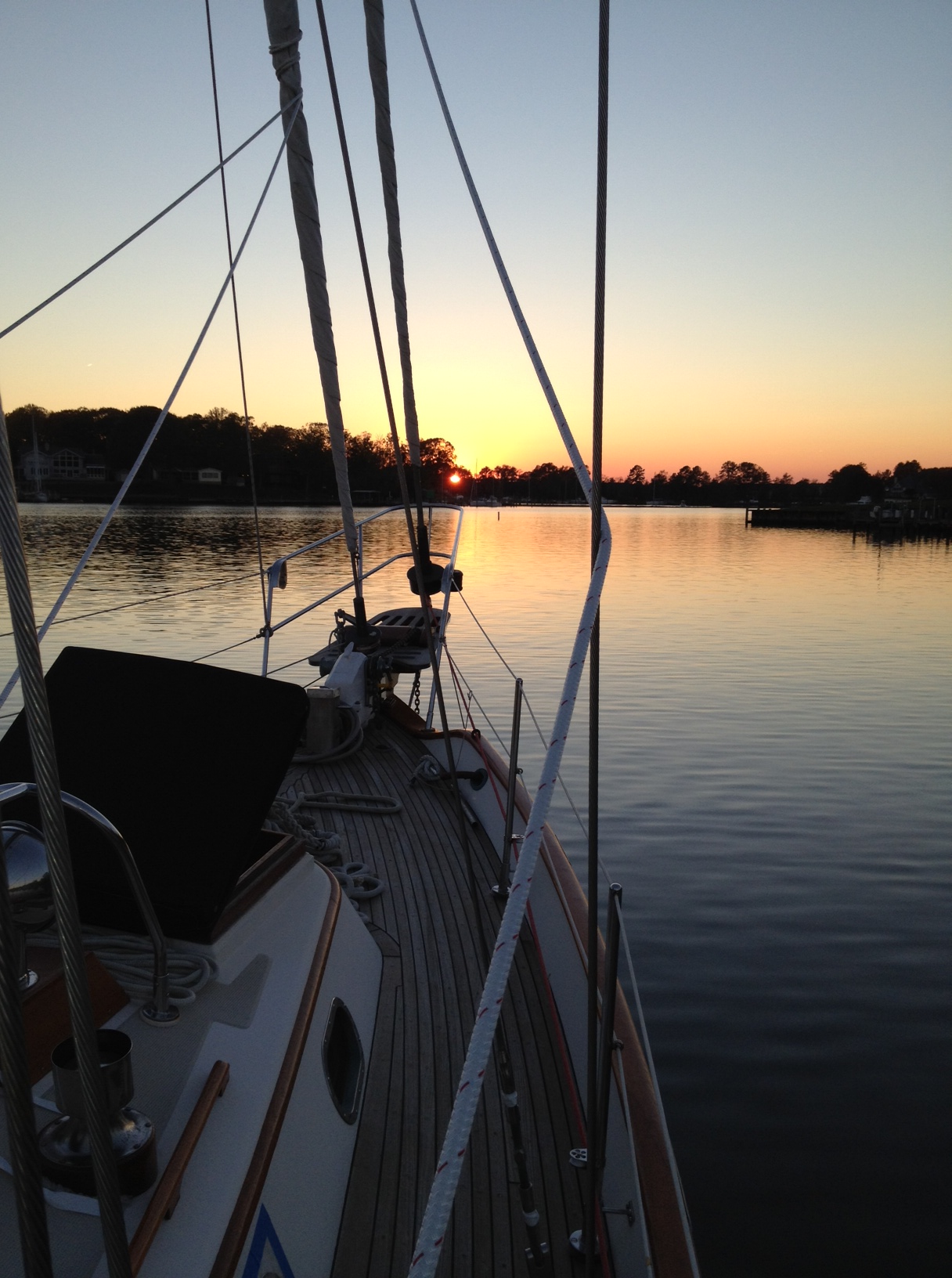
We anchored at Solomons island last night (picture by Dickie, and yes, we left Annapolis). When you anchor, you choose a spot and throw your anchor: water does not belong to people. I’m appreciating more and more the sense of freedom water provides. Also, bodies of water do not encourage convergence of people like roads do, and our creek was oh so pretty and peaceful. Very peaceful in fact: by leaving the dock we lost our AC electric connection to the world, and kept our electronic usage to a minimum. I made Shrimp fra Diavolo while Dickie changed the oil filter, and we went to sleep at 8:00. We got up with the sun and are now on our way to Reedville, our next anchorage.

Dickie connected us to a SPOT Messenger. You can click on the link below and follow Peregrine’s journey by the hour. Wow! http://share.findmespot.com/shared/faces/viewspots.jsp?glId=06RQp4be1Kns4nIG3kCcxGXxgA5qXqhv0

Storm # 2

Image

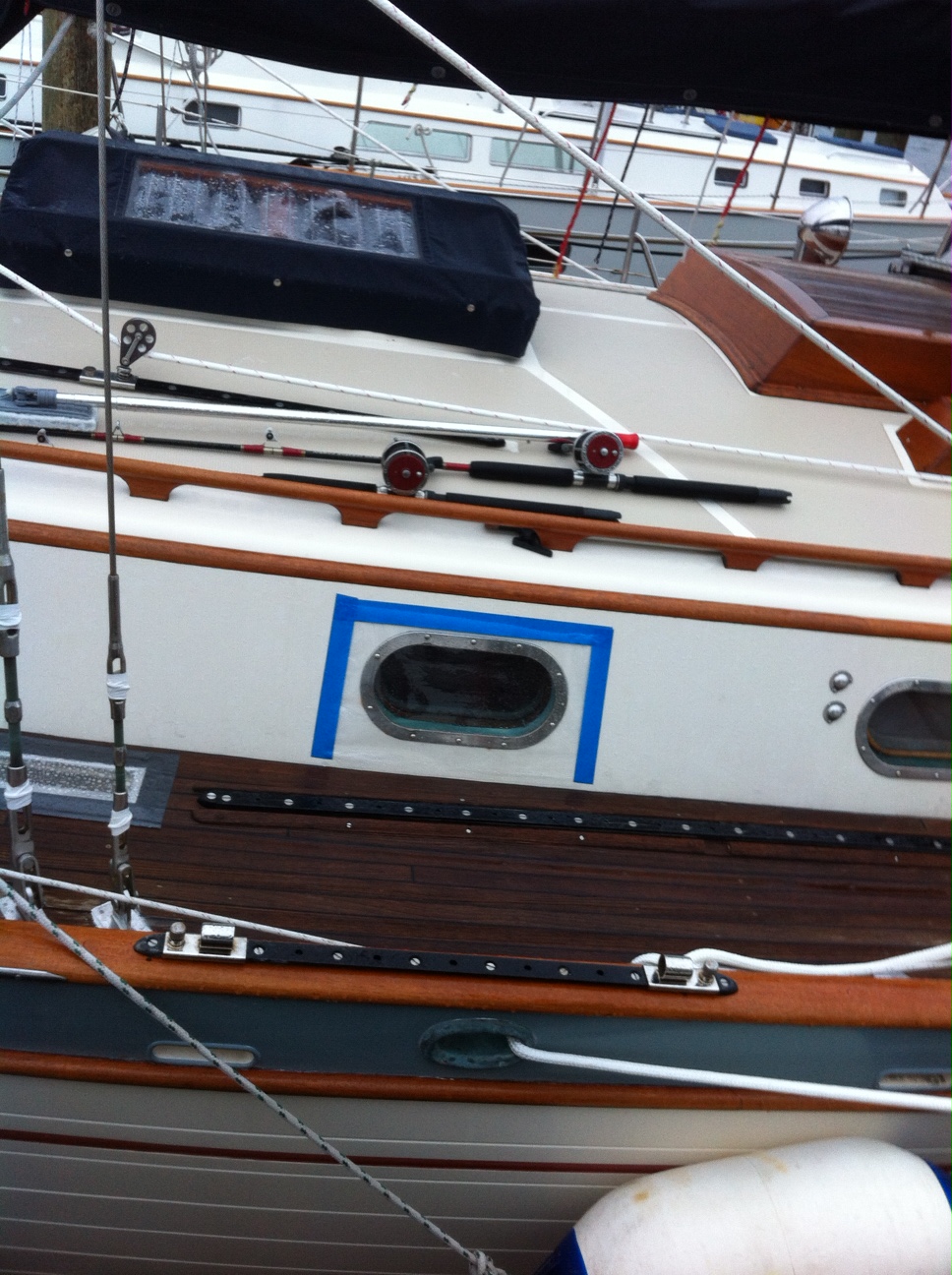
Waiting for storm # 2 to hit Annapolis (Snowstorm Athena). Sorry the news are on the repetititive side. This time, we prepared for leaks with plastic and tape (see pictured port). And the Spanglers are both architects? Pleeeease!

Friday is our new departure date. It’s supposed to be nice for a few days.

Docking

Image

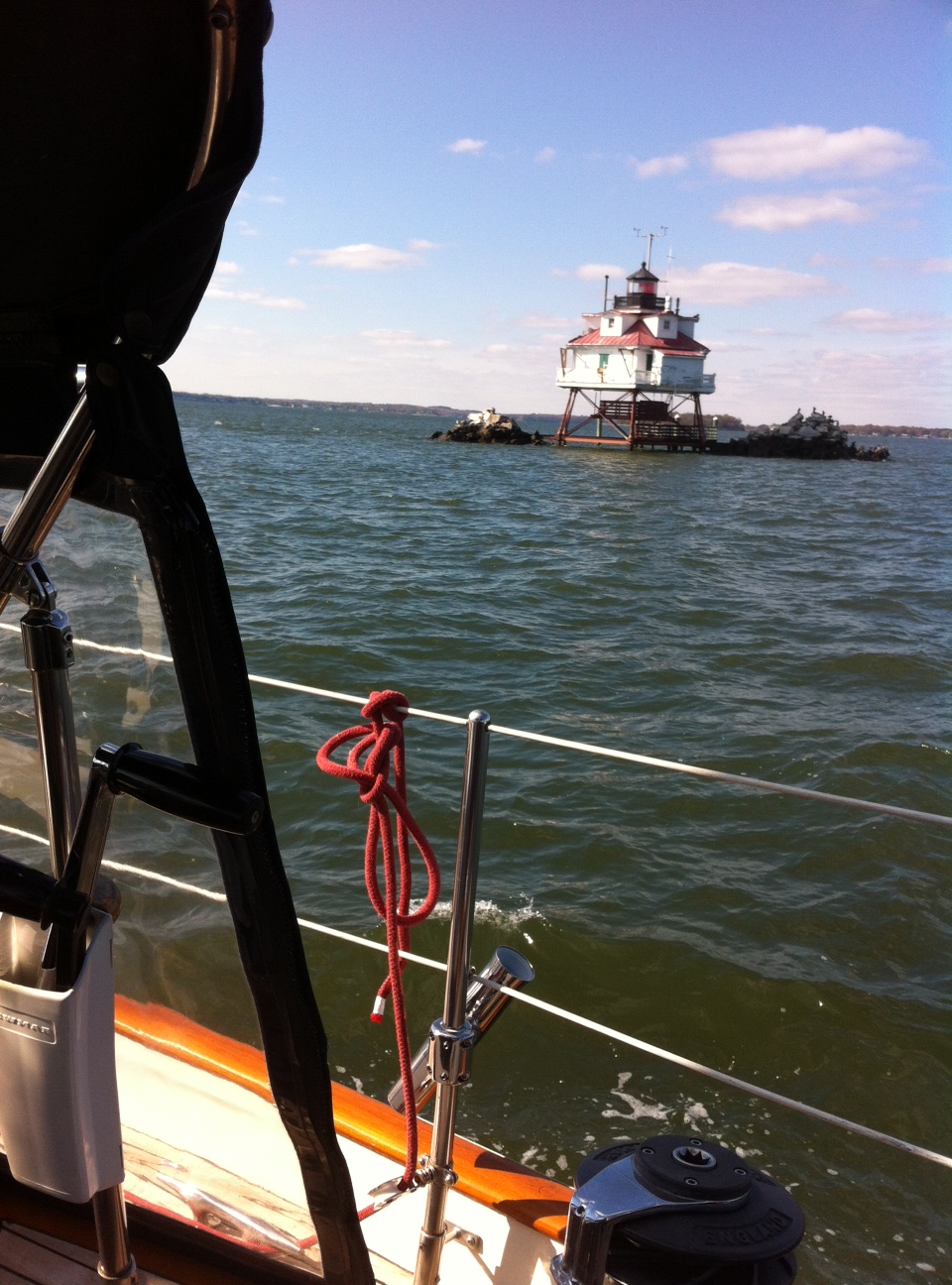
We had a shake-down sail yesterday. Well, rather a motoring, and the good news is, the motor seems to work. We went to Thomas Point Shoal light, pictured above. The light structure is a bit surprising–isn’t a light house normally a tower with thick walls, bunch of steps and no windows but at the top? The answer is no. Weathering Sandy in that light house must have been something.

Image 

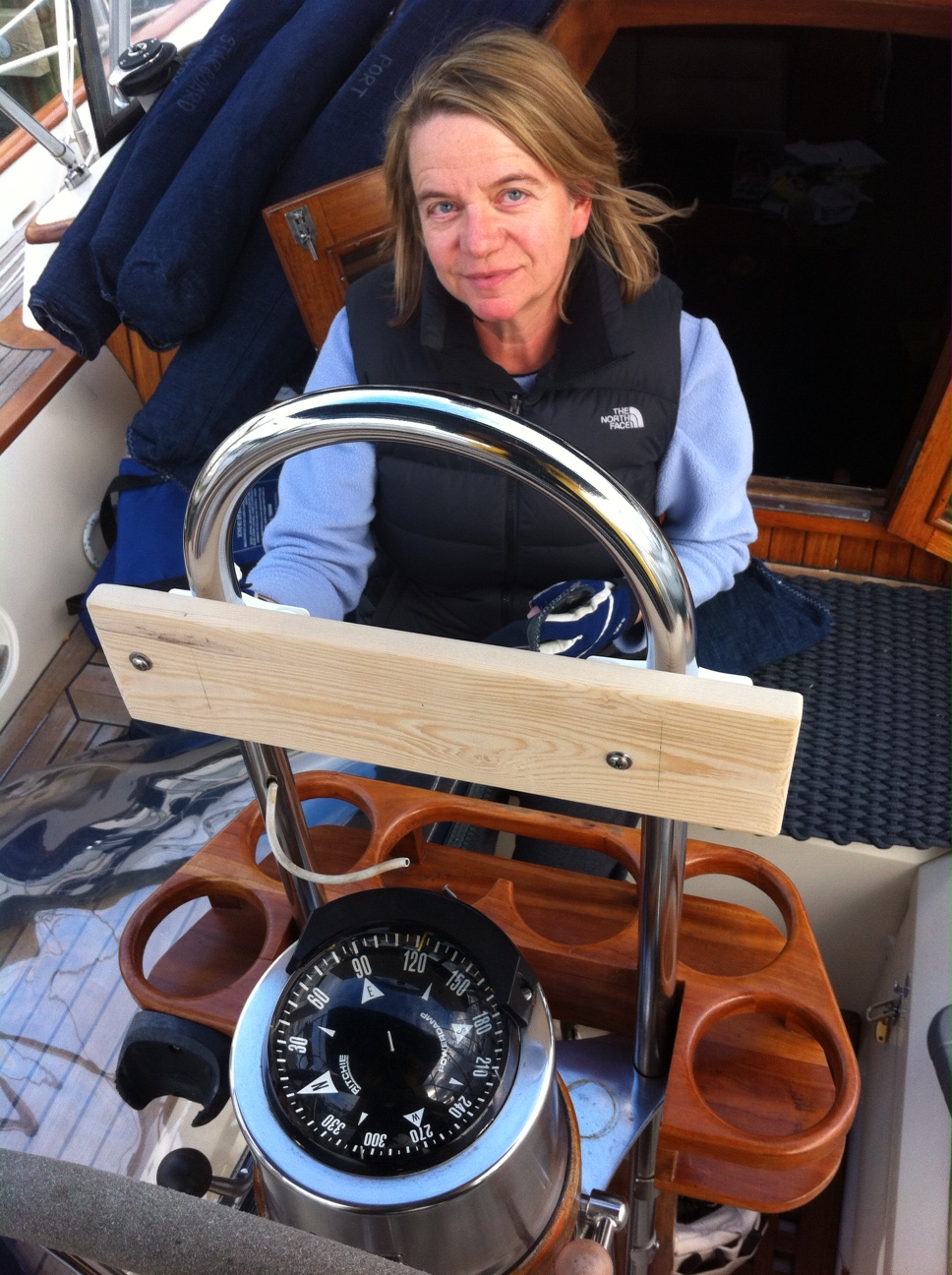
The Chesapeake bay was strikingly beautiful. Deeply green water, a sailing regatta going on (they all had the same boat, same sail, same everything–no boat had an advantage, just the sailing skills), and so forth. So, what did I do among such beauty? I worked some more on the zippers of the canvas and barely saw anything (see picture). I much enjoy thoughtless, repetitive tasks when otherwise overloaded with new experiences. In the present case, I was mentally preparing for our first docking coming up after the little trip. I was to loop the spring line around the first pile at the dock (like lassoing a horse, but with plentiful cold water to fall in), and if I missed it, I had another chance at the second pile, and if I missed that second pile, Peregrine would crash in the dock. In the end, a generous soul sprung to help at the dock, and we did not crash. 

When are the Spanglers leaving?

Image

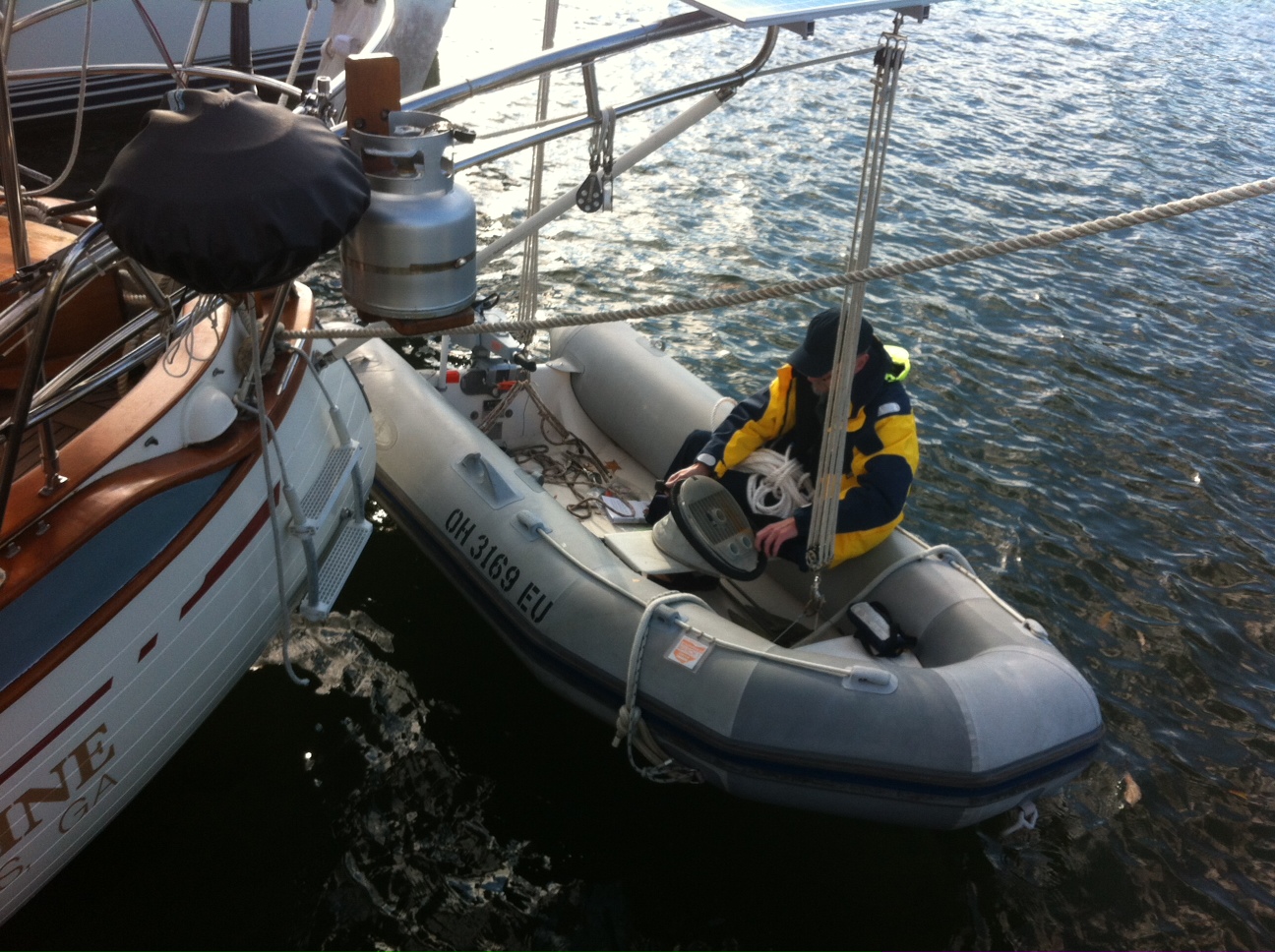
Marie-Laure asked when we were leaving. Since we changed some parts on the engine, we are to use it 10 hours to make sure it works. It means 2 days of boating around the Chesapeake Bay. There is a gale today, and we can’t leave port. So, if all goes well, we may start the trip on Tuesday. Meanwhile, we are busy. Today we did: 2 weeks worth of laundry, starting the stove, inflating and testing the dinghy (pictured), and I can now fix dysfunctional canvas zippers, aside from cleaning and lubricating them. There is a trick I’d be glad to share with anyone having trouble opening a zipper (closing is easier).